
 EN
EN
 UK
UK
 RU
RU
 AR
AR
 BN
BN
 ZH
ZH
 DE
DE
 ES
ES
 FR
FR
 HI
HI
 ID
ID
 UR
UR
 PT
PT
 TR
TR

Affiliate marketers and media buyers keep running into the same problem: a profitable setup works for a few days or weeks, then performance drops, accounts get blocked, and the cost per click goes up. The search for the next setup starts a new cycle that ends the same way. A model built around testing one-off setups no longer delivers stable income, because user behavior and platform algorithms have changed.
Users make a purchase decision after 3–5 touchpoints, not after the first click. Attribution now takes the entire chain of interactions into account, not just the last action. Telegram, Facebook, and Google update their algorithms every month, which makes it impossible to rely on one scheme for the long term. The cost per click keeps rising, while audience trust keeps falling.
The solution is to move from one-off setups to a system that manages every stage of user interaction: from attracting traffic through several channels to warming up leads, handling objections, and generating repeat sales. Telegram is a key channel in such a system, but manual management of accounts, campaigns, and analytics in Telegram has stopped being effective because of strict platform limits and requirements. This article breaks down the five layers of systematic media buying and explains which Telegram tasks require automation.
Layer 1: traffic as a channel portfolio
Relying on a single traffic source creates a high level of risk. If that channel changes its algorithms, raises prices, or blocks an account, the entire funnel stops. In practice, stable income comes from diversified portfolios of 3–5 channels: SEO, paid search, social media, email marketing, and messengers.
Mobile traffic accounts for more than 70% of e-commerce. Video makes up 62% of all internet traffic. Social commerce is growing by 30% every year. Audiences live on mobile devices, consume video, and make purchases inside apps. Telegram fits these trends: it is a mobile environment with high engagement and support for video formats. However, sending traffic directly from Telegram to an offer without warming the audience up is ineffective, because a cold audience is not ready to buy.
Layer 2: creative as a trust-building tool
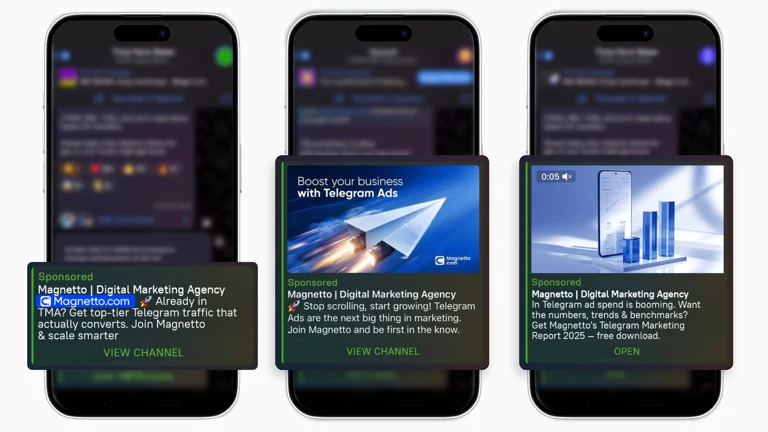
Video creatives can increase conversion by up to 49% compared to static images. But the deciding factor is not the format — it is the depth and transparency of the content. Superficial reviews and direct calls to buy are working worse and worse. Users expect breakdowns, case studies, comparisons, and an honest description of the drawbacks.
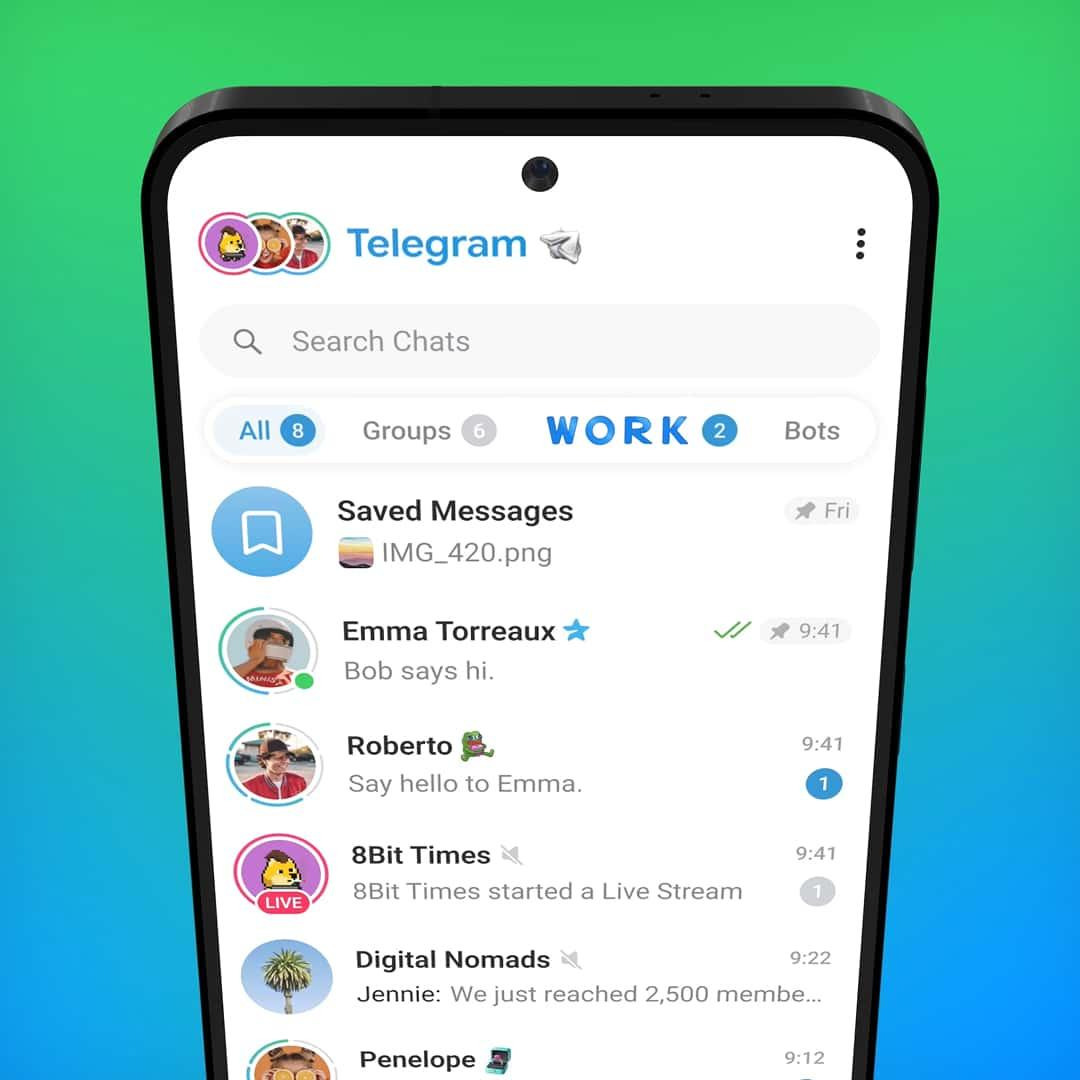
In Telegram, creative includes more than just channel posts. It also includes account presentation (avatar, bio, username), the style of comments, and the tone of replies in private messages. All of these elements build trust, and without that trust, conversion is impossible.
Layer 3: funnel infrastructure
A modern funnel is not limited to a landing page and a “buy” button. Full infrastructure includes micro-landing pages for different segments, automated email sequences, tracking across every touchpoint, retargeting in social media and messengers, and chatbots for warming up leads. 88% of marketers use artificial intelligence, and predictive funnels are built on three layers: data collection, a prediction model, and execution.
An example of a working flow: content (a post or video) → lead magnet (PDF, checklist) → email sequence of 3–5 emails → main offer → follow-up nurturing through Telegram. Without infrastructure, an affiliate marketer is just throwing out links without managing user behavior. With infrastructure, they gain control over every stage.
Layer 4: lead nurturing and objection handling
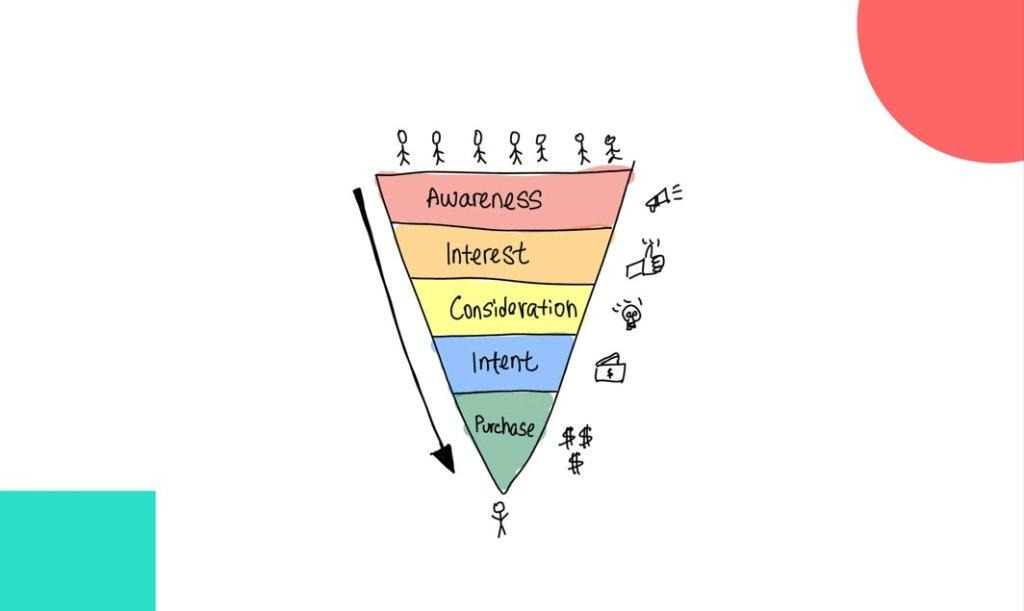
A sale rarely happens on the first touch. Users move from cold to warm through a sequence of actions that demonstrate value and remove objections. Email marketing delivers up to $36 in ROI for every dollar spent. Messengers strengthen this effect because message open rates in Telegram are higher and delivery is more reliable.
A Telegram nurturing flow can look like this: a subscription to the channel → a welcome message series → useful content every 2–3 days (case studies, comparisons, mistake breakdowns) → the offer after 5–7 touchpoints. The key principle is that content should solve the user’s problems, not push them to buy. Educational materials, objection-handling content, and competitor comparisons work better than direct advertising.
Manually running this kind of nurturing for a thousand subscribers is impossible. It requires triggered messages, segmentation, and personalization — in other words, automation.
Layer 5: analytics as the control center
Without analytics, affiliate marketing turns into guesswork. A data-driven approach delivers measurable growth: Revo increased revenue by 56% after implementing a proper analytics system. At the same time, data from different sources can diverge — the gap between GA4 and internal statistics can reach 50%. Relying on a single source leads to the wrong decisions.
An analytics system should include multi-channel attribution (tracking the entire chain of touchpoints), marketing mix modeling (budget allocation across channels), and end-to-end tracking (from the first click to payment). The arbitrage process itself becomes a cycle: collect data → formulate a hypothesis → test → scale what works → go back to the data. Without this cycle, systematic performance improvement is impossible.
The role of Telegram in systematic media buying
Messengers are now recognized as a new traffic channel. The shift from large platforms to direct contact with the audience has been a key trend over the last two years. In the system described above, Telegram performs three functions: retaining subscribers who did not buy right away; warming them up through short, native messages with high CTR; and generating repeat sales from the existing base.
Telegram constantly changes its limits and activity requirements. Sending messages to users who are not in your contact list can lead to account blocks. Registering accounts in different regions requires different verification methods — from phone calls to reCAPTCHA. Manually managing even ten accounts takes up more than 80% of working time with technical operations, leaving little room for strategy. Automating the Telegram part of the system becomes a necessity.
Telegram automation: tasks and the tool
To automate work in Telegram, you need software that solves the following tasks:
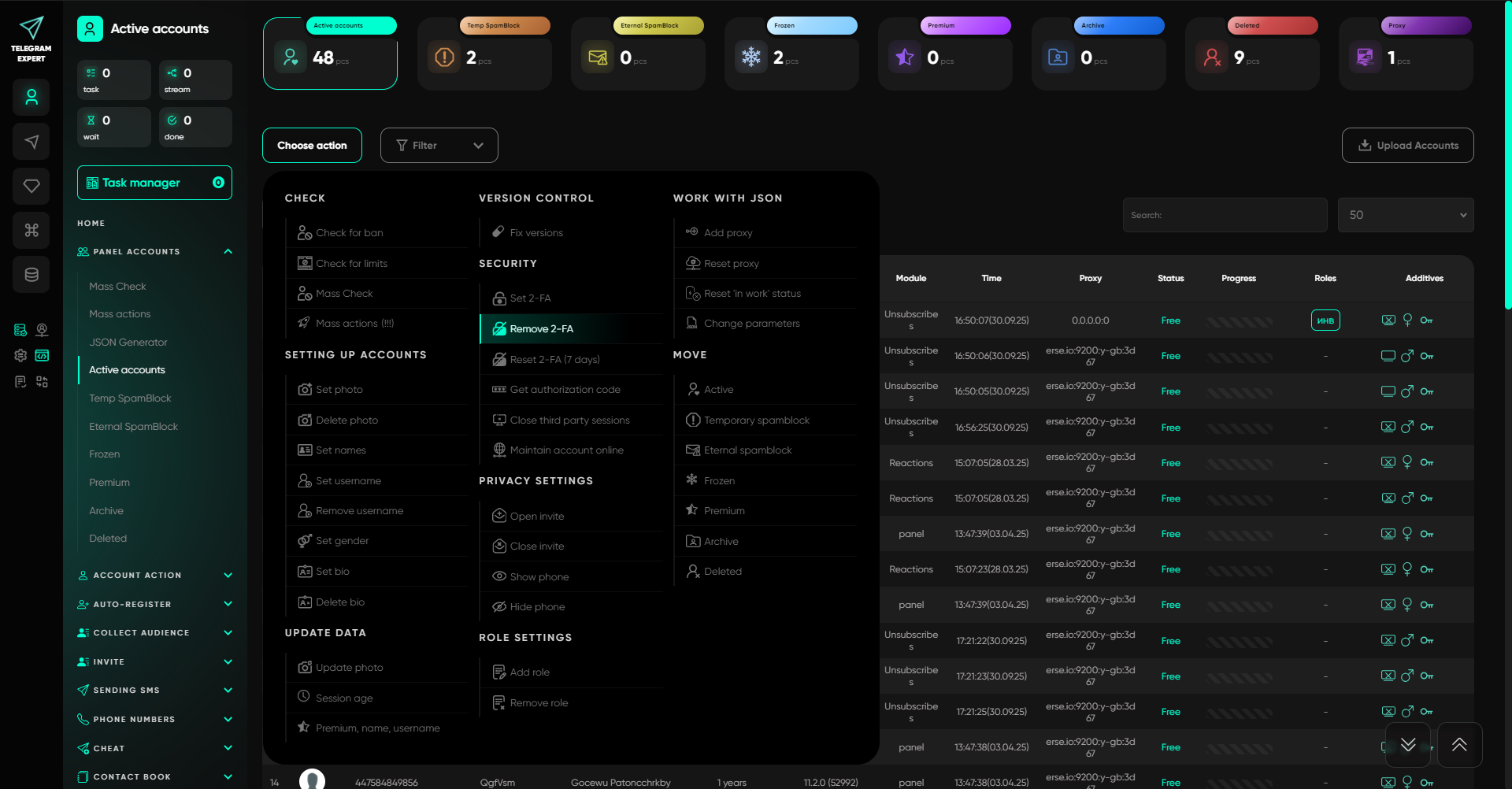
Managing multiple accounts. Accounts need to be sorted by status (active, in spam block, frozen), checked for bans in bulk, and updated with new profile data (photo, bio, username, 2FA) with randomization to avoid detectable patterns.
Warming up accounts. Fresh accounts with no prior activity quickly run into restrictions when used for bulk actions. You need automatic simulation of natural behavior, such as mutual conversations.
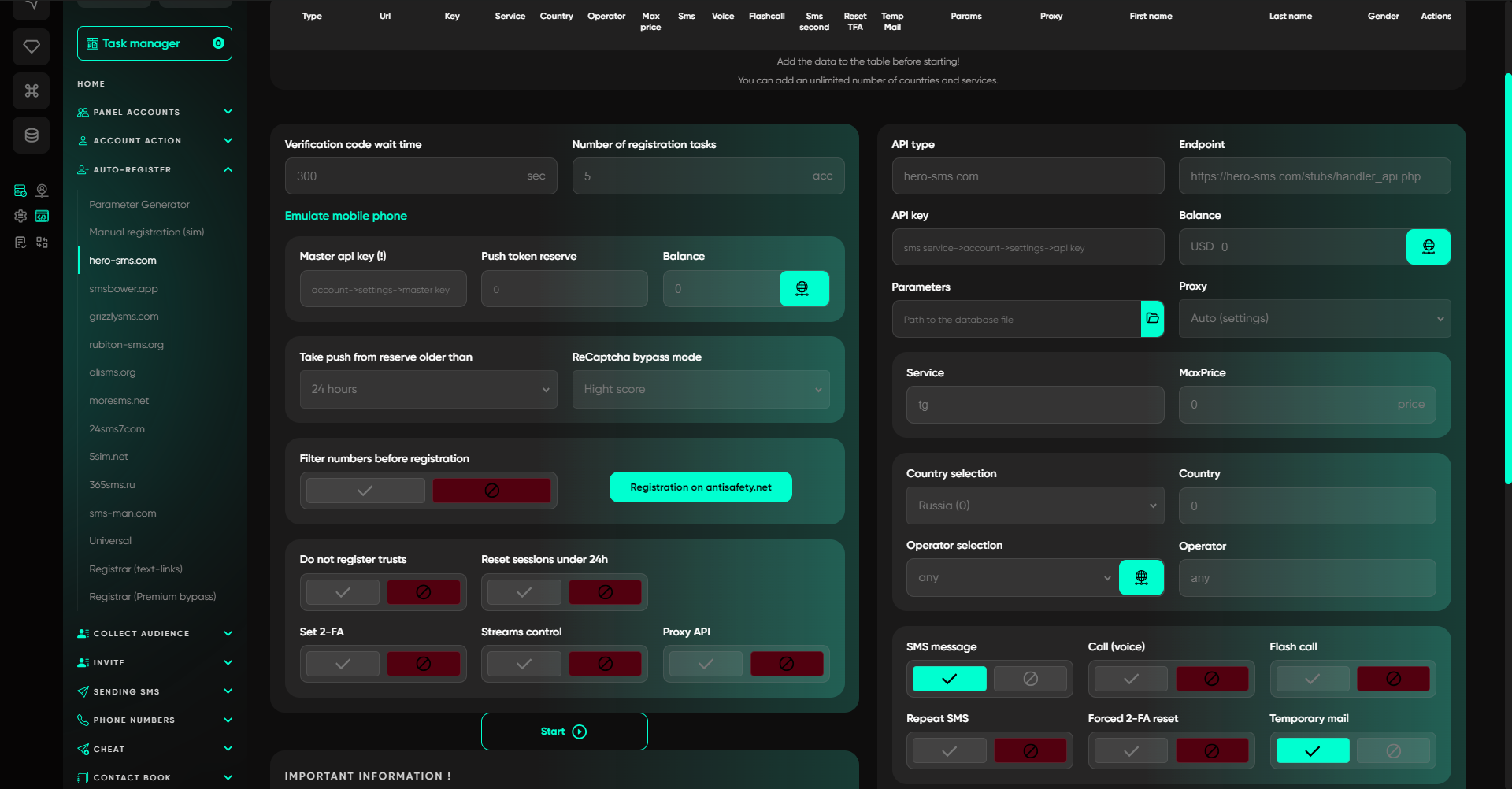
Account registration. Manually registering dozens of accounts through SMS confirmations is time-consuming. What you need is automation through virtual number services that support different regions and different code delivery methods (SMS, call, flash call).
Audience collection. Blind parsing brings in untargeted traffic. You need to collect only active users — people who posted in a chat within the last 30 days or commented under posts — and then clean the database of duplicates and inactive accounts.
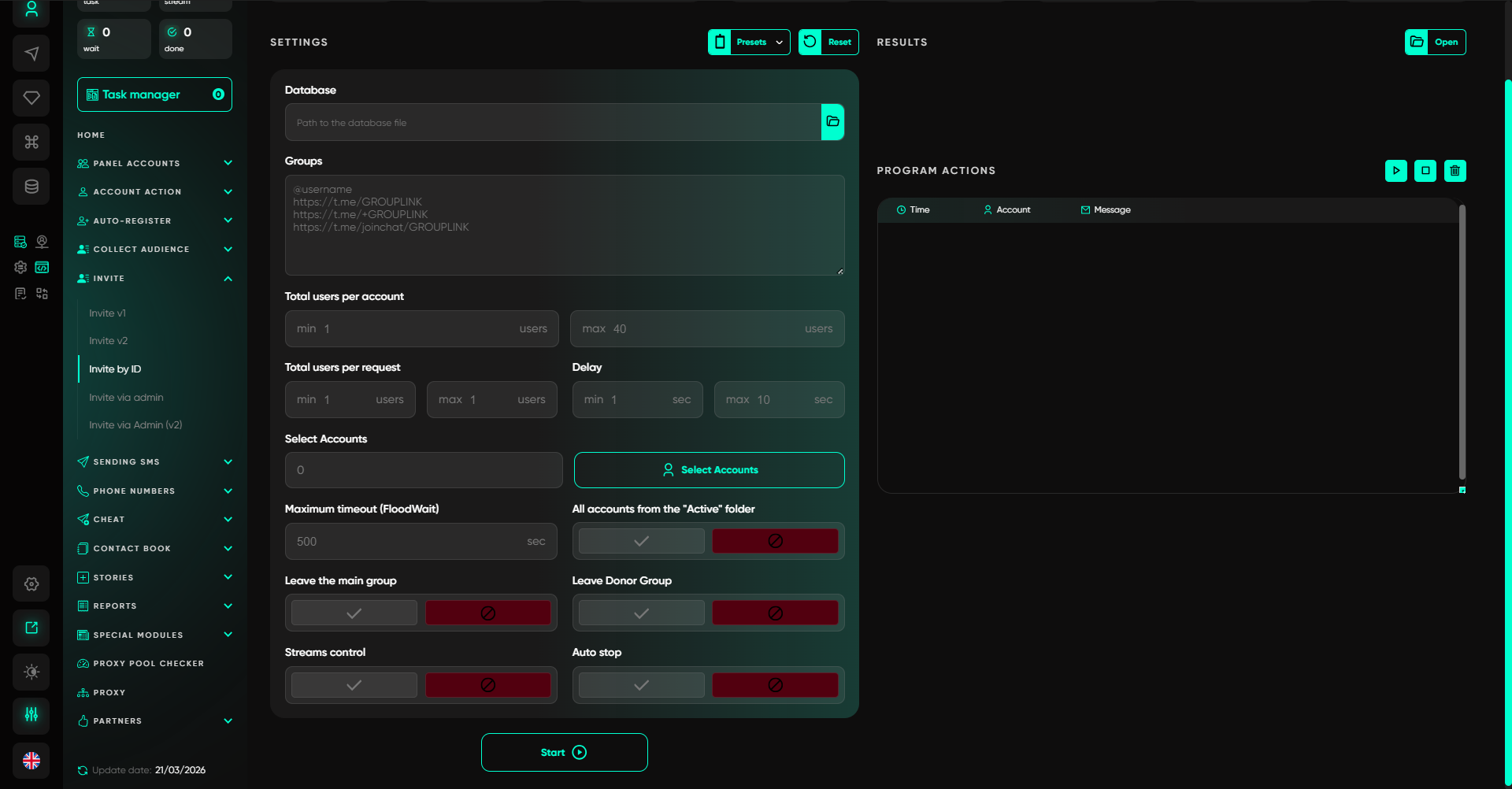
Inviting. Mass invitations to groups and channels are the riskiest scenario. Different methods are required, including safer bot-based methods where the main accounts do not participate in invitations directly.
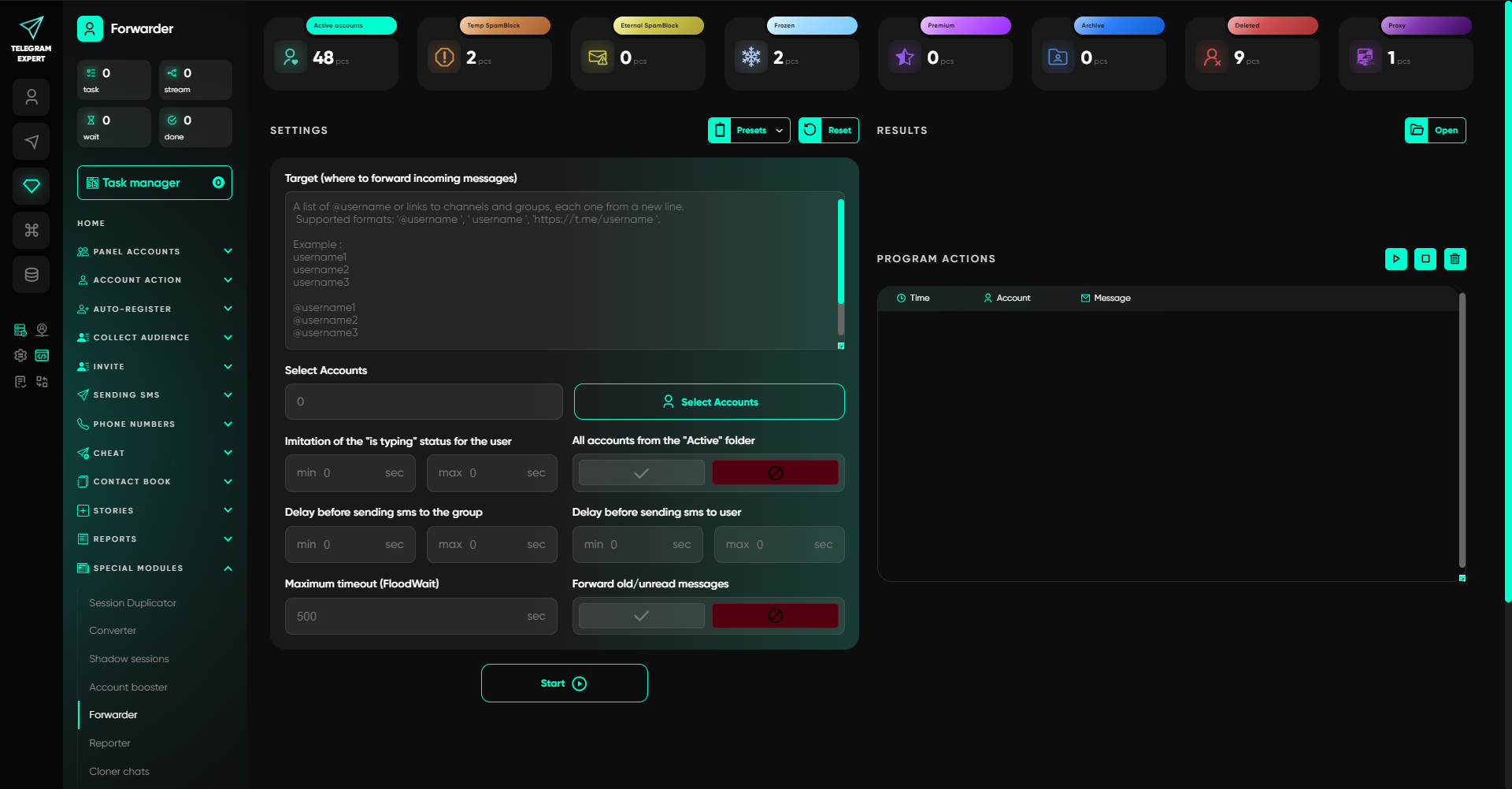
Mailings and communication. Template-based messages are filtered out by Telegram. You need text randomization (character substitution, spintax) and the ability to generate unique messages for different recipients.
Proxies. Stability depends directly on proxy quality. The software should check proxy response, analyze pools for IP overlap (repeated IPs increase the risk of blocks), and flexibly configure proxy assignment to accounts by geo or other parameters.
Analytics. Standard analytics systems do not show detailed statistics for Telegram mailings and invitations. The software should keep its own stats, calculate the load on each account, and generate reports.
One of the tools that implements all of these functions is Telegram Soft Expert.

It is a ready-made solution that turns Telegram from a headache into a working asset.
While you are manually registering accounts, warming them up for weeks, and hesitating to invite users, Telegram Expert does all of this automatically.
Here is what you get when you install this software:
Speed. Tasks that take 40 hours of manual work are completed by the software in 2 hours. Registration of 100 accounts through 10+ SMS providers with automatic code insertion and 2FA can be launched as a task and run in the background. Collecting an active audience (users who posted in a chat in the last 30 days, commenters) is just one click, and the database is ready.
Account safety. Telegram blocks accounts for templates and direct invites. Telegram Expert gives you safer methods: text randomization (spintax + character substitution), bot-based inviting (your accounts stay out of sight), and load control for every session. Accounts last many times longer.
Transparency and control. You can see which proxies are truly unique (the pool checker will show IP overlap), which account sent how many mailings (the load calculator), and which setup produced the result (the report generator). No more working blind.
Scale. Whether you have 10 accounts or 1,000, the interface and logic remain the same. You do not rebuild your processes as you grow. You simply add new sessions to the panel and distribute them into folders (“active,” “spam block,” “frozen,” “Premium”).
Who benefits from this:
Affiliate marketers who drive traffic from Telegram and are tired of bans.
SMM specialists managing client accounts.
Channel owners who boost activity.
Anyone who values their time and does not want to pay for mistakes.
Visit the Telegram Expert website and download the demo version. Test it on small volumes — register 5 accounts, collect a base from one chat, and run a trial mailing. Make sure the software does what it promises. And once you see it for yourself, get a license and scale your revenue.
Summary
One-off setups have stopped being a source of stable income because of multi-touch user journeys, frequent algorithm changes, and declining trust in direct advertising.
A systematic approach includes five layers: a diversified traffic portfolio, trust-building creatives, funnel infrastructure, automated lead nurturing, and analytics as the control center.
Telegram is a key channel for retention, lead nurturing, and repeat sales, but manual management of accounts, mailings, and analytics in Telegram is no longer effective. Automating these tasks through specialized software is a necessary condition for scale and stability. Building a system — rather than testing one-off setups — is what determines success in modern affiliate marketing.







Comments 0