
 EN
EN
 UK
UK
 RU
RU
 AR
AR
 BN
BN
 ZH
ZH
 DE
DE
 ES
ES
 FR
FR
 HI
HI
 ID
ID
 UR
UR
 PT
PT
 TR
TR
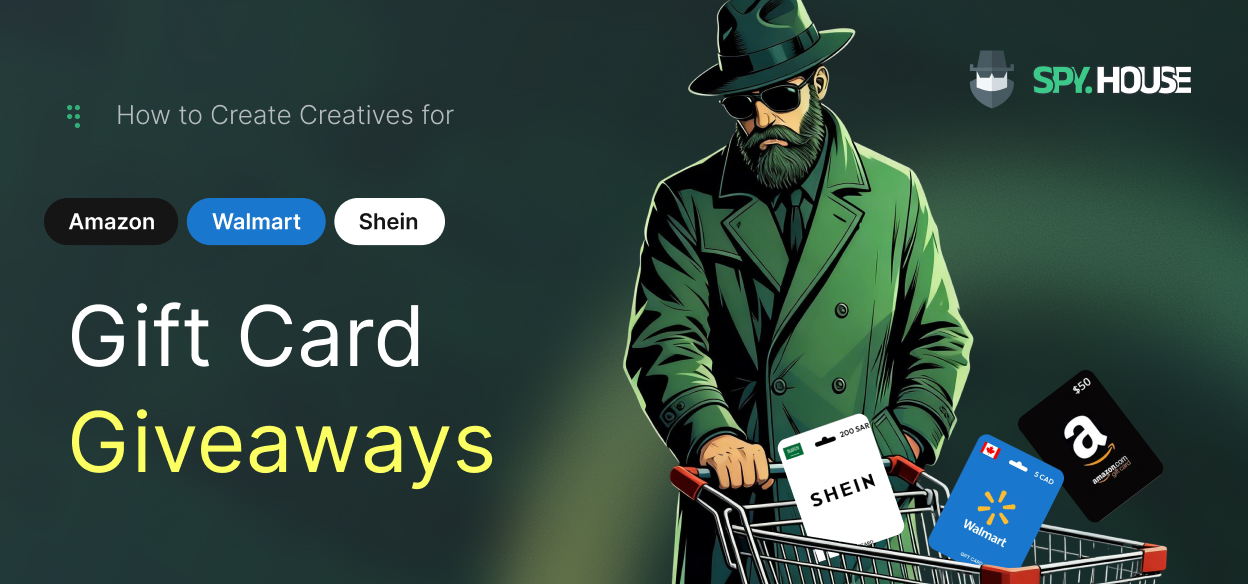
The Art of Sweepstakes Creatives: How to Make High-Converting Ads for Amazon, Walmart, and Shein
In the world of media buying and content marketing, the Sweepstakes vertical remains evergreen. After all, who would turn down a free shopping spree? However, due to high competition and "banner blindness," standard images with a simple "Win a Gift Card" caption no longer deliver results.
To achieve a low Cost Per Click (CPC) and a high Conversion Rate (CR), your creative must trigger three specific emotions: trust, excitement, and urgency.
1. Visual Psychology: Universal Rules for All Brands
Before diving into brand-specific tactics, it’s essential to understand the foundation. A Sweepstakes creative is not just a picture; it’s a "bridge" between a bored user and their dream of a free acquisition.
The "Live Photo" Principle (User-Generated Content): Studio-rendered cards look like ads. A photo of a card held in a person’s hand, set against a car steering wheel or a kitchen table, acts as social proof. The user believes that someone has already received this prize.
The "Golden Denomination" Rule: Don’t try to give away $10,000. It looks like a scam. The most effective denominations are:
$100 – $250: Look realistic, perfect for quick impulsive registrations.
$500 – $750: The upper limit of trust. Works well for audiences willing to spend 2–3 minutes on a survey.
2. Amazon: Focus on Possibilities and Delivery
Amazon is "everything for everyone." Your task here is to showcase variety and the joy of receiving a package.
"Boxes at the Door": Images of the famous brown Amazon boxes with the smile-arrow on a doorstep. This hits the dopamine trigger of anticipating an order.
Gadgets and Electronics: Natively place an iPhone, PlayStation, or Dyson hair dryer next to the Amazon card. The card is simply the key to these highly desired items.
Shopping Lists: Use a "Check-list" format. What would you buy for $500? Place checkmarks next to headphones, smartwatches, or a coffee machine.
Color Palette: Use the signature orange (#FF9900) and dark blue. This increases brand recognition on a subconscious level.
3. Walmart: Family Budget and Daily Life
The Walmart audience consists of pragmatic people - homemakers and heads of households who value savings and practicality.
The Full Cart: A photo of an overflowing shopping cart with groceries and household goods, with a gift card resting on top. The message is simple: "Fill your fridge for free."
Receipts and Price Tags: Visualizing direct benefits. A comparison like "Was $200 - Now $0 with a Walmart card."
Locality: Use photos of real stores with the recognizable blue signage. This creates the feeling that the prize can be claimed and spent right now in the neighborhood.
4. Shein: Aesthetics, Fashion, and TikTok Style
The rules change here. Shein’s audience consists of Gen Z and Millennials. They don’t just want "stability"- they want "hype" and aesthetic content.
Unboxing (Haul): Mimic a frame from a TikTok or Reels video. A mountain of clothes in transparent Shein zip-bags. Text: "I won this for $0."
Outfit Collages: Assemble a stylish look (dress, bag, shoes) and caption it: "Total: $750. Get it for free."
Mirror Aesthetic: A mirror selfie in trendy clothing with a sweepstakes interface overlay.
Visuals: Use pastel tones, magazine-style fonts, and plenty of pink and white. Less formality, more of a "best friend" vibe.
5. The Anatomy of Creative Copy
Text should be short and sharp. You have only about 1.5 seconds to capture a user’s attention in their feed.
Key elements of a copy strategy:
Targeted Headline: Instead of a boring "Win," use "Testing Program 2026." This creates a sense of belonging to an exclusive group of testers and elevates the status of the offer.
Call to Action (CTA): The phrase "Check availability" sounds less demanding and more intriguing than an aggressive "Register Now."
Creating Scarcity: Add a tag like "Only 5 cards left." This is the classic FOMO (Fear Of Missing Out) trigger that makes users click faster.
Geo-Personalization: Mentioning a city or country (e.g., "Only for [City] residents") drastically increases the trust level of the offer.
6. Technical Tips and Life Hacks
Interactivity and Gamification
Instead of static images, use simple mechanics in video or GIF formats to break through "banner blindness":
"Scratch Card": An animation of scratching off a protective layer to reveal the denomination.
Box Choice: Three gift boxes on the screen; the user is prompted to "tap" one to find the prize.
Slot Machine: Spinning reels that inevitably stop on three brand logos.
Errors That Kill Conversion:
Low Resolution: Grainy, stretched logos immediately signal a fake.
Small Fonts: 80% of traffic comes from mobile devices. If the text can’t be read without a magnifying glass, there will be no click.
Misaligned Expectations: If the creative promises a $1000 card but the landing page says $100, you will see a massive bounce rate.
Conclusion
Creating creatives for Amazon, Walmart, and Shein is a game of deep associations. Amazon is access to any product in the world. Walmart is real help for the family budget. Shein is the opportunity to refresh a wardrobe at no cost.
Test at least 5-7 different approaches at the start. Remember: sometimes an amateur photo of a card taken in poor lighting brings in significantly more leads than a high-end design because it looks "real."




Comments 0