
 EN
EN
 UK
UK
 RU
RU
 AR
AR
 BN
BN
 ZH
ZH
 DE
DE
 ES
ES
 FR
FR
 HI
HI
 ID
ID
 UR
UR
 PT
PT
 TR
TR

Most of these mistakes trace back to one quiet layer: the IP your research runs on. Here is how each one skews what you see – and how to fix it.
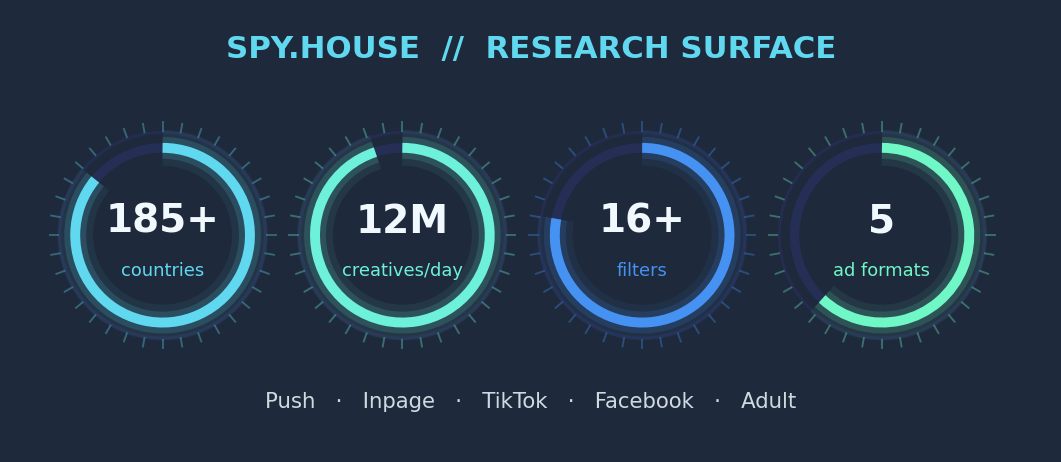
Competitor research is only as good as the data behind it. A tool like Spy.House gives you an enormous head start: it collects already-published ads from open public sources across 185+ countries, around 12M creatives a day, source and device, across Push, Inpage, TikTok, Facebook formats. That is the research surface. But what data you actually pull from it depends on how your requests reach those platforms and landing pages – and that is decided by your IPs. Get the IP layer wrong and the cleanest spy tool still feeds you skewed conclusions. Those conclusions are expensive: you copy the wrong funnel, chase the wrong angle and burn budget proving a strategy that never ran in your market. Here are the five mistakes that quietly corrupt competitor data and the practical fix for each.
Mistake 1: Researching from a single IP (and your own GEO)
Running all your research from one address – usually your own, in your own country – corrupts data in three ways at once. You see the localized results of the wrong market, some creatives and pages never surface for you and you hit rate limits fast because every request comes from the same IP. Public ad libraries and landing pages read that one IP and treat the burst as automation. A buyer in Warsaw checking a US campaign from a Polish IP sees Poland-default results, misses the US creatives entirely and trips anti-bot limits within a few dozen requests.
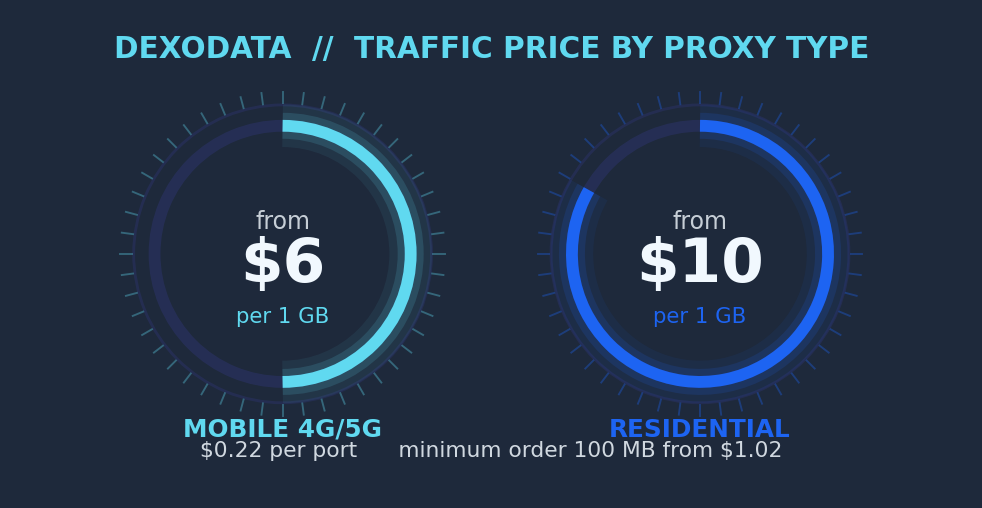
The fix is to research from local residential or mobile IPs in the markets you care about. Dexodata runs a 100% opt-in network with strict KYC and AML standards across Europe, North and South America and Asia, with residential and mobile IPs in one dashboard on one balance, 99.9% uptime and a “pay only for what you use” model. Residential IPs come from real household connections and blend in more naturally than hosting-based addresses; mobile 4G/5G IPs ride on carrier networks, earn one of the highest trust levels with anti-fraud systems and rotate naturally through the day, which makes their traffic look as close as possible to the activity of ordinary mobile users.
Mistake 2: Assuming wrong GEO just means missing creatives
It is worse than missing a few ads. If Spy.House shows you what runs in Germany but your landing-page checks and verifications come from a US IP, you are drawing conclusions about a market you never actually saw. Offers, prices, creatives and even the funnel can differ by country, region and carrier. Wrong GEO does not mean incomplete data – it means confident, wrong decisions. A skincare offer might run a discount funnel in one country and a free-trial funnel in another; verify from the wrong IP and you build your whole approach around the wrong playbook.
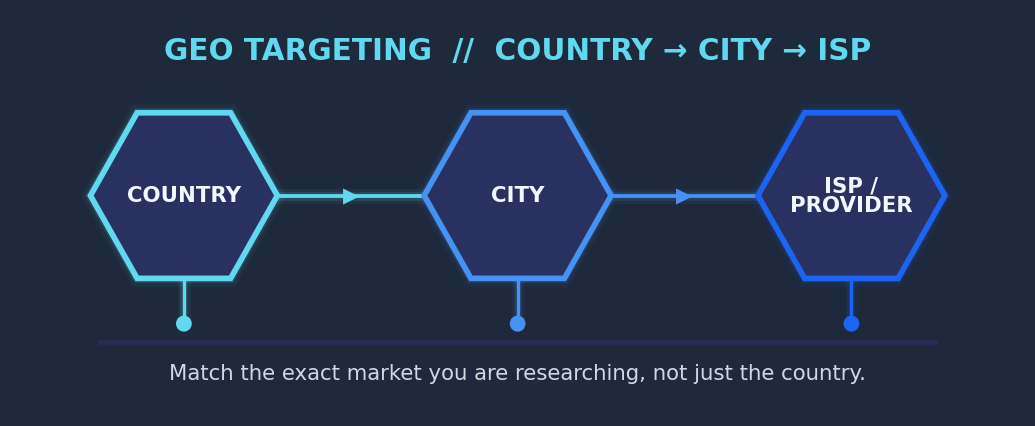
The fix is geo-targeted IPs that match the exact market you are researching. With Dexodata you can target by country, city and ISP, so the request looks like a real local user of that specific network rather than a generic foreign visitor.
Mistake 3: Treating the IP as the whole disguise
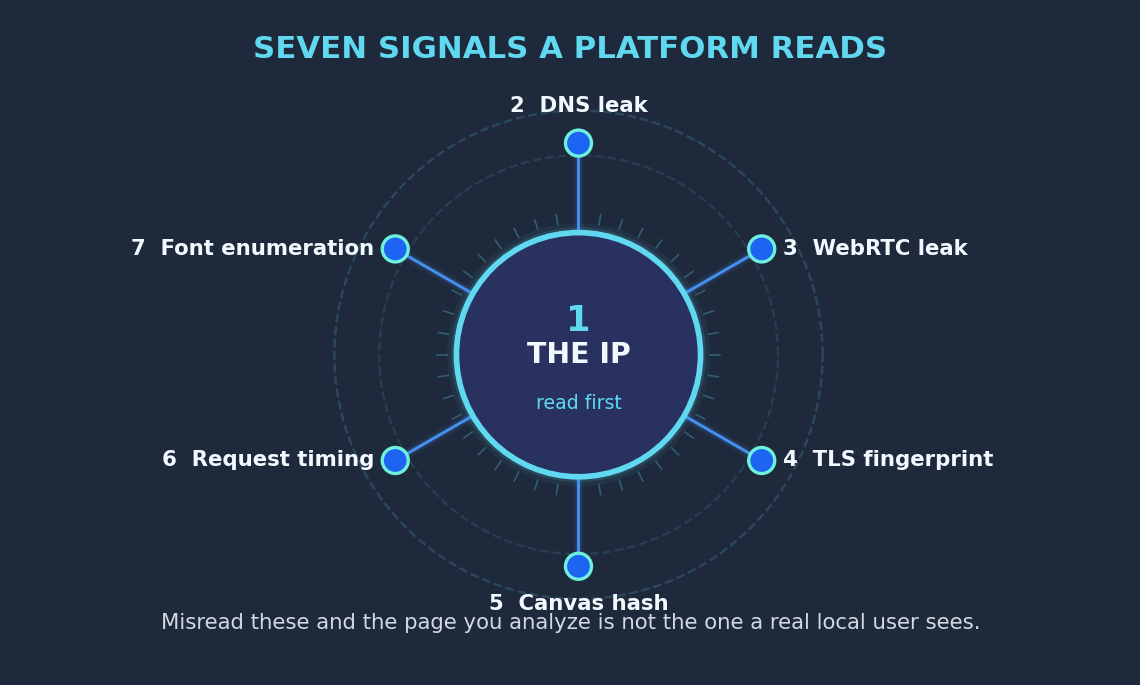
Even a perfect local IP is only the first signal a platform reads. From the IP alone a system parses the ASN and its owner, the network type, the geo down to the city, the reputation of the surrounding /24 and the request history of that exact address. Then six more signals can give you away: DNS and WebRTC leaks, TLS fingerprint, canvas hash, request timing and font enumeration.
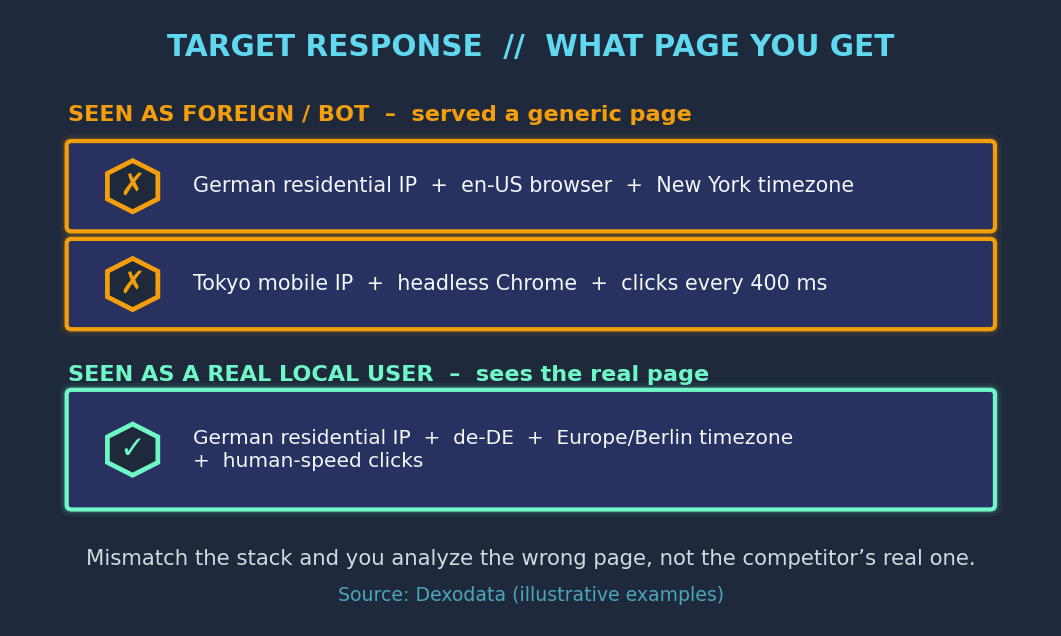
When the IP says one country but the browser locale, timezone, fingerprint and behavior say another, the target often serves a generic or region-default page instead of the real one. You end up analyzing a page no local user would ever see. The fix is consistency: align the whole stack to the IP region so your research reflects the real competitor experience. This is also why landing-page downloads only pay off when the request that fetched them looked local: a page pulled through a mismatched stack is the region-default version, not the one real customers convert on.
Mistake 4: Buying traffic by price per GB, not by research value
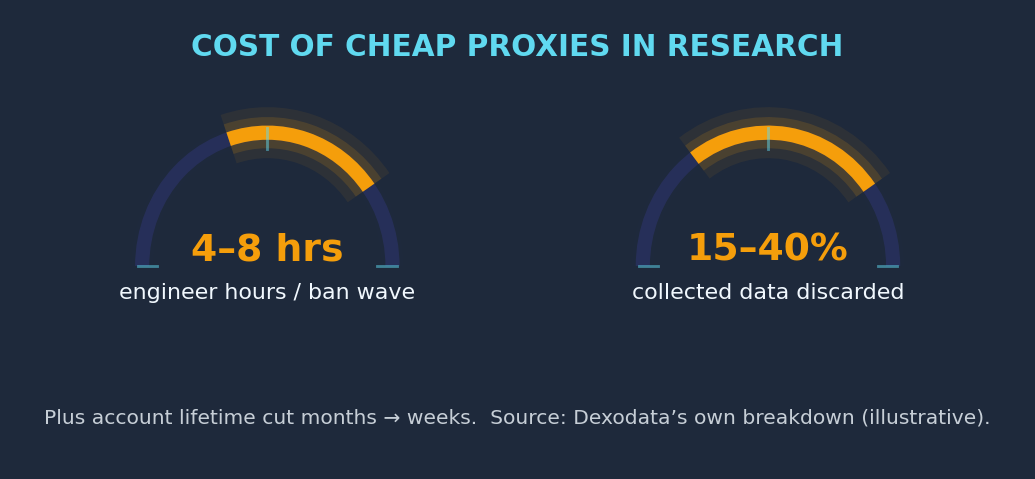
This is where research budgets quietly leak. Picking a proxy network on cost per GB alone hides what actually matters: how much of the data you collect is usable. A weak pool shows up as repeated blocks, wrong-GEO results and re-collection runs. In Dexodata’s own breakdown, that means roughly 4–8 engineer hours per block wave, 15–40% of collected data discarded from wrong regions or partial loads and account lifetime cut from months to weeks. The real cost of one clean, trustworthy creative or landing page is far higher than the sticker price per GB.
Budget by the volume of trustworthy data you need, not by the cheapest gigabyte. A network that costs a little more per GB but returns clean, correctly geo-located data pays for itself in fewer re-runs and decisions you can actually trust. Re-collection is the silent tax here: every blocked or wrong-GEO run is data you end up paying for twice.
Mistake 5: No rotation logic and no traffic budget per market
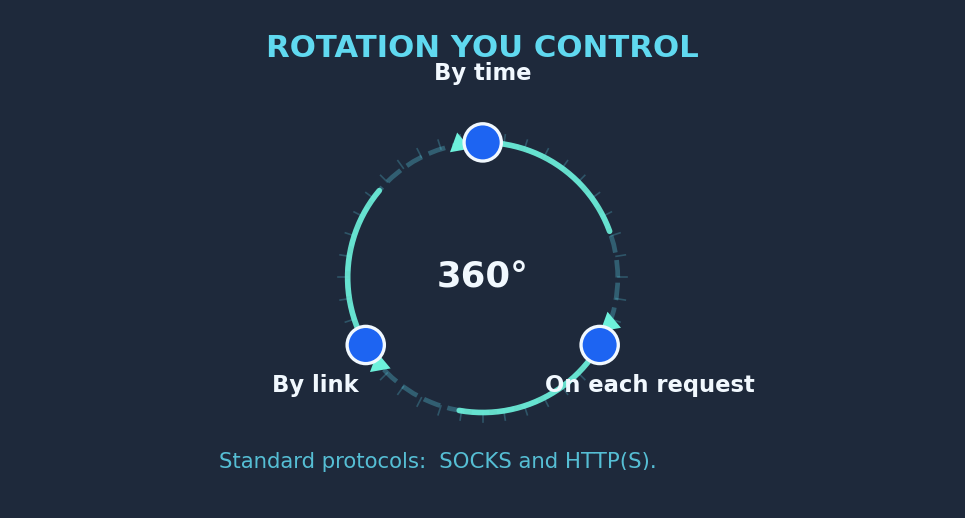
Monitoring is not a one-off. To track an offer across several countries over time, you need a rotation plan and a traffic budget per market – otherwise the job stalls halfway and the budget leaks into repeat runs. Decide up front how each IP rotates and roughly how much traffic each market needs. Dexodata allows you change the IP by time, by link or on each request.
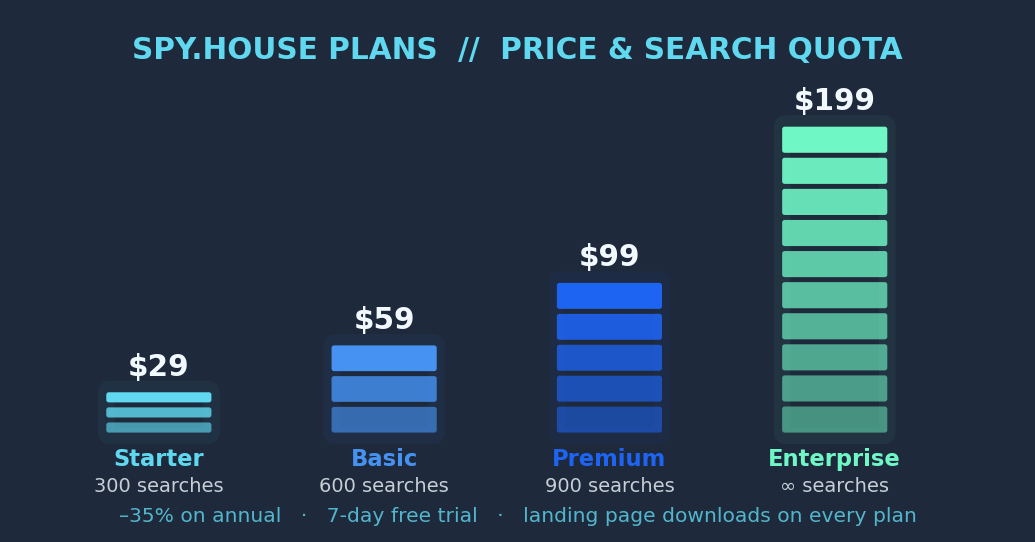
Pair that with your Spy.House plan so the two budgets line up. Search volume is tiered – Starter, Basic and Premium at 300, 600 and 900 searches, Enterprise unlimited – so match your monthly research depth to a plan, then size your Dexodata traffic to the number of markets and pages you actually verify. With “pay only for what you use” pricing, the proxy spend scales with the research, not ahead of it. If you track 10 markets every week, size proxy traffic to those markets and the pages you open per run rather than to a flat cap you will either blow through or never touch.
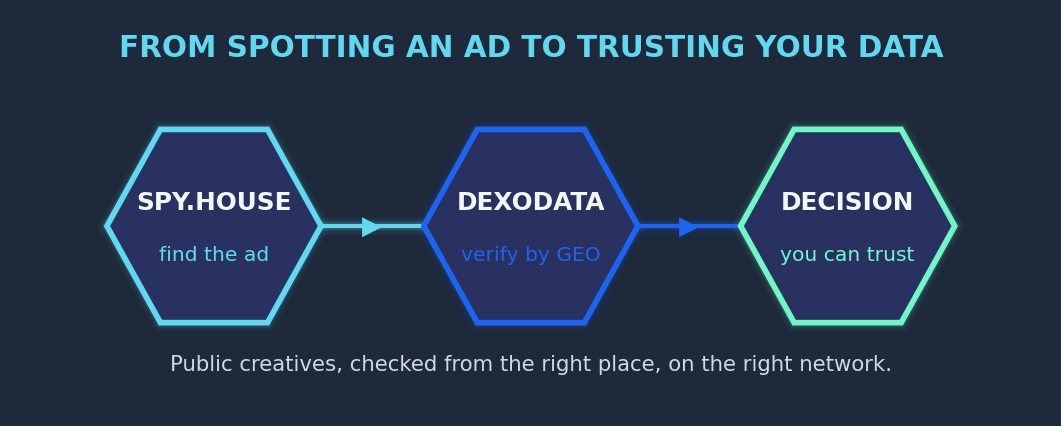
Put it together: discover, then verify
The pattern behind all five fixes is simple. Spy.House is built for discovery – surfacing the public creatives and landing pages your competitors are running. Local, well-aligned proxies are what make that discovery trustworthy, by letting you see each market exactly as its real users do. Discovery without verification is a guess; verification without discovery is slow. Together they turn raw spy data into decisions you can stand behind.
A 60-second research sanity check
Before you trust a competitor report, run it through these five questions:
• Researching from the right place: residential or mobile IPs from the exact market, not your home connection.
• GEO targeted properly: country, city and ISP match the audience you are studying.
• Whole stack aligned: locale, timezone and behavior match the IP, so you see the real page.
• Traffic planned: budgeted by volume of clean data, not by the cheapest gigabyte.
• Monitoring sustainable: rotation and per-market traffic set so monitoring does not stall.
What clean competitor research looks like
Put the fixes together and a single research run changes shape. Instead of one home IP hammering a library until it throttles, you spread requests across local residential and mobile IPs in each target market, aligned so every session reads as a real local user. The creatives you collect are the real ads users actually see in each specific market, the downloaded landing pages are real working funnels and the volume is sized to the markets you track rather than a flat cap.
• Per-market IPs: you see Germany from a German residential IP, Brazil from a Brazilian one, not through a single traffic source for all markets.
• Repeatable runs: rotation and traffic are planned per market, so weekly monitoring runs to completion instead of stalling.
• Clean inputs: Spy.House supplies the public creatives, Dexodata supplies the right vantage point and the report reflects reality.
Bottom line
The problem often starts not at the stage of analyzing creatives and landing pages but much earlier – at the IP level. If the data is collected through the wrong network, the picture of the market can come out distorted.
Spy.House helps you analyze competitor activity and discover winning campaign setups. Dexodata provides access to data through residential and mobile IPs. Get a free $1 starting balance with Dexodata and pay only for the traffic you actually use. This way, you'll be working with data that reflects the real market situation.




Comments 0