
 EN
EN
 UK
UK
 RU
RU
 AR
AR
 BN
BN
 ZH
ZH
 DE
DE
 ES
ES
 FR
FR
 HI
HI
 ID
ID
 UR
UR
 PT
PT
 TR
TR
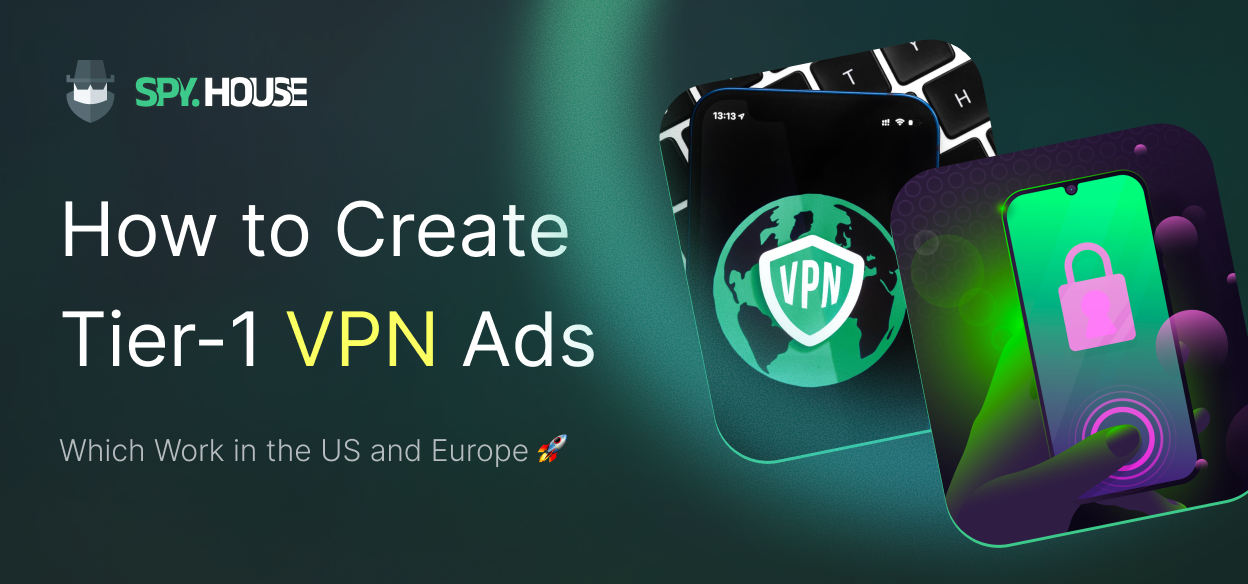
The Tier-1 market (USA, Canada, UK, Germany, Australia) is the "Major League" of affiliate marketing. This is where you find the highest cost-per-click (CPC), the strictest moderation, and most importantly, the most sophisticated users. In 2026, a resident of New York or Berlin sees up to 5,000 advertising messages a day. Their brain has learned to instantly filter out aggressive red banners, "You are under attack!" alerts, and cheap stock images of hackers in hoodies.
If you continue to run VPN offers on Tier-1 using 2020-style creatives, your ROI is destined for stagnation. In this article, we will break down how to create ads that don't just bypass banner blindness but convert cold traffic into stable, high-value subscriptions.
The Psychological Profile of a Tier-1 User: Why Old Schemes are Dead
The biggest mistake an affiliate can make is trying to extrapolate experience from Tier-3 markets to developed ones. In emerging economies, a VPN is often seen as a tool for "digital survival." In Tier-1, the internet is formally free, and the digital literacy of users is significantly higher.
Audience Specifics:
Saturation: The average American already has 1–2 VPN apps installed (often free or corporate versions). Your offer must answer the question: "Why is this service better/faster/more private than my current one?"
Immunity to Mislead: False virus notifications or "memory cleaning" alerts in the US don't trigger fear; they trigger an immediate report. This leads to rapid ad account bans.
Ethical Consumption: Users pay attention to company jurisdiction. Emphasizing "Swiss-based" or "Panamanian privacy" in your creative can provide a +20% boost in trust.
Evolution of Fear: From "Masked Hackers" to "Corporate Algorithms"
The classic image of a hacker in a Guy Fawkes mask evokes nothing but an ironic smile today. Modern residents of Europe or the US understand that the real threat to their privacy comes not from a teenage intruder, but from legal entities (Big Tech) and Internet Service Providers (ISPs).
New "Pain" Vectors: Selling browsing history to advertisers, data harvesting for insurance scoring, or dynamic pricing based on a digital profile.
Creative Ideas:
"Digital Trail": Visualize a trail of brand logos following a user, knowing everything from their sneaker brand to their political views.
"Data Auction": An image of a user profile on an auction block. Slogan: "Your ISP knows you better than your mom. And they are selling that knowledge."
The "Glass House" Metaphor: A person living in a transparent house while corporations walk by and peer through the windows. The VPN, in this case, is the "curtains" that restore privacy.
Streaming and Sports: Maximizing Event-Based Traffic
If privacy is a "vitamin" (useful, but easy to forget), then content access is a "painkiller" (needed right now). In Tier-1, people are obsessed with subscriptions, but content libraries are heavily segmented.
Technical Hooks for Creatives:
Sports Arbitrage: During the Champions League final or a UFC fight, install costs can drop by 2-3x if the creative promises lag-free streaming. The key trigger here is "No Throttling."
The Subscription Economy: A Netflix subscription is expensive in the US but cheaper elsewhere. A creative styled as "How to save $100/year on your subscriptions"—showing a step-by-step switch to Turkey or Argentina—is a goldmine for budget-conscious millennials.
UGC Approach: Record a video (or order one on Fiverr) where a regular guy with a British accent shows how he "unlocked" US Hulu to finish his favorite series. Raw smartphone footage generates significantly more trust than professional motion design.
Design: Minimalism, Aesthetics, and the "Scent" of a Premium Product
Tier-1 users are accustomed to high-quality software. If your creative looks amateurish, using standard Canva fonts, the user subconsciously transfers that feeling to the product itself. They won't trust their banking data to an app that "looks cheap."
Golden Rules of Visual Aesthetics:
Apple/Stripe Style: Use clean sans-serif fonts (San Francisco, Inter, Montserrat). Leave plenty of "white space."
Color Palette: Avoid aggressive reds. Use "Safe Blue" (the color of trust), deep indigo, or "Cyber Green." Dark Mode currently converts better as it is associated with professional software and eye protection.
Icons Over Text: Instead of long descriptions, use recognizable pictograms: a padlock, a shield, a world map, or a lightning bolt (speed).
The "Remote Work" Segment: Targeting Digital Nomads
Since 2020, the remote work segment in the US and Europe has grown exponentially. Freelancers, developers, and managers work from cafes, airports, and hotels. This is your hottest audience.
Scenarios for this group:
"Public Wi-Fi Danger": Show a person with a laptop in Starbucks. Overlay a graphic: "Man in the middle attack." Explain that open Wi-Fi is an open door to their corporate email.
Slogan: "Your office is everywhere. Make sure your connection is private."
Visual: A laptop surrounded by a glowing force field when the VPN button is toggled. It’s a simple, clear metaphor for "on-the-fly" security.
Copywriting: Mastering Moderation and "Soft Power"
In 2026, Meta and Google algorithms are smarter than ever. Direct calls to "Hide your IP" or promises of "Full Anonymity" often lead to shadowbans or a low Quality Score.
How to write copy that algorithms and people love:
Use the concept of the "Borderless Internet." It sounds positive and doesn't violate "misleading claims" policies.
Focus on freedom, not fear: Instead of "Stop hackers," write "Experience the web without limits."
Play on curiosity: "Did you know your travel sites show different prices based on your location?" This compels the user to click to see if they are being overcharged.
Social Proof: In Tier-1, reviews carry massive weight. Add a badge saying "App of the Day" or "Top-Rated Privacy App 2026." Even as a graphical element, it can increase CTR by 15-20%.
Video Content: 15 Seconds to Profit
Static banners in TikTok, Reels, and Shorts barely work for utilities anymore. Video allows you to show the "magic" of the product—the exact second a blocked resource becomes accessible.
Structure of the Perfect Clip (The 15-Second Hook):
0–3 sec (The Problem): A screen showing "Content not available in your region" or an imitation of a buffering video.
3–7 sec (The Solution): A close-up of a finger pressing one button in the app. Smooth, satisfying connection animation.
7–12 sec (The Result): Content instantly loads in 4K quality. A happy user face.
12–15 sec (Call to Action): A limited-time offer (e.g., "70% OFF for the next 24 hours").
Technical Triggers: No-Log Policy and Kill Switch
Advanced users in Germany or the US care about technical specs. If you are targeting men aged 25–45, add "smart" keywords to your creatives.
What to include on banners:
AES-256 Encryption: Military-grade standard. Sounds reliable and solid.
No-Log Policy: A guarantee that data isn't saved. For Europe (GDPR), this is a critical factor.
Kill Switch: A feature that cuts the internet if the VPN drops. This is a trigger for those who truly care about security.
WireGuard Protocol: Mentioning this protocol signals that your VPN is modern and fast.
Checklist Before Launching a Tier-1 Campaign
To avoid burning your budget in the first few hours, check your creatives against these points:
Flawless Localization: If you use American English for the British market (or vice versa), conversion will drop. Hire a proofreader to check slang and spelling.
Consistency: The creative design must be identical to the landing page design. If the ad is minimalist and the landing page is cluttered with 2000s-style GIFs, you will lose 90% of your traffic during the transition.
Loading Speed: Videos must be optimized. In mobile traffic, a 1-second delay in loading costs you money.
Platform Adaptation: On TikTok, the creative should look like a regular blogger's video; on Facebook, it should look like a serious recommendation from a tech publication.
Conclusion
In Tier-1, the winner isn't the cheapest VPN, but the one that looks like a "safe harbor" in a chaotic digital world. Work on aesthetics, target the pains of conscious consumption, and always test the "Streaming vs. Privacy" approach. This is the only way in 2026 to achieve an ROI that justifies the high cost of traffic.



Comments 0