
 EN
EN
 UK
UK
 RU
RU
 AR
AR
 BN
BN
 ZH
ZH
 DE
DE
 ES
ES
 FR
FR
 HI
HI
 ID
ID
 UR
UR
 PT
PT
 TR
TR

As businesses expand into international markets, access to localized online data has become a practical necessity rather than a technical advantage. From validating regional pricing to monitoring ad placements and analyzing search visibility, teams increasingly rely on accurate local perspectives.
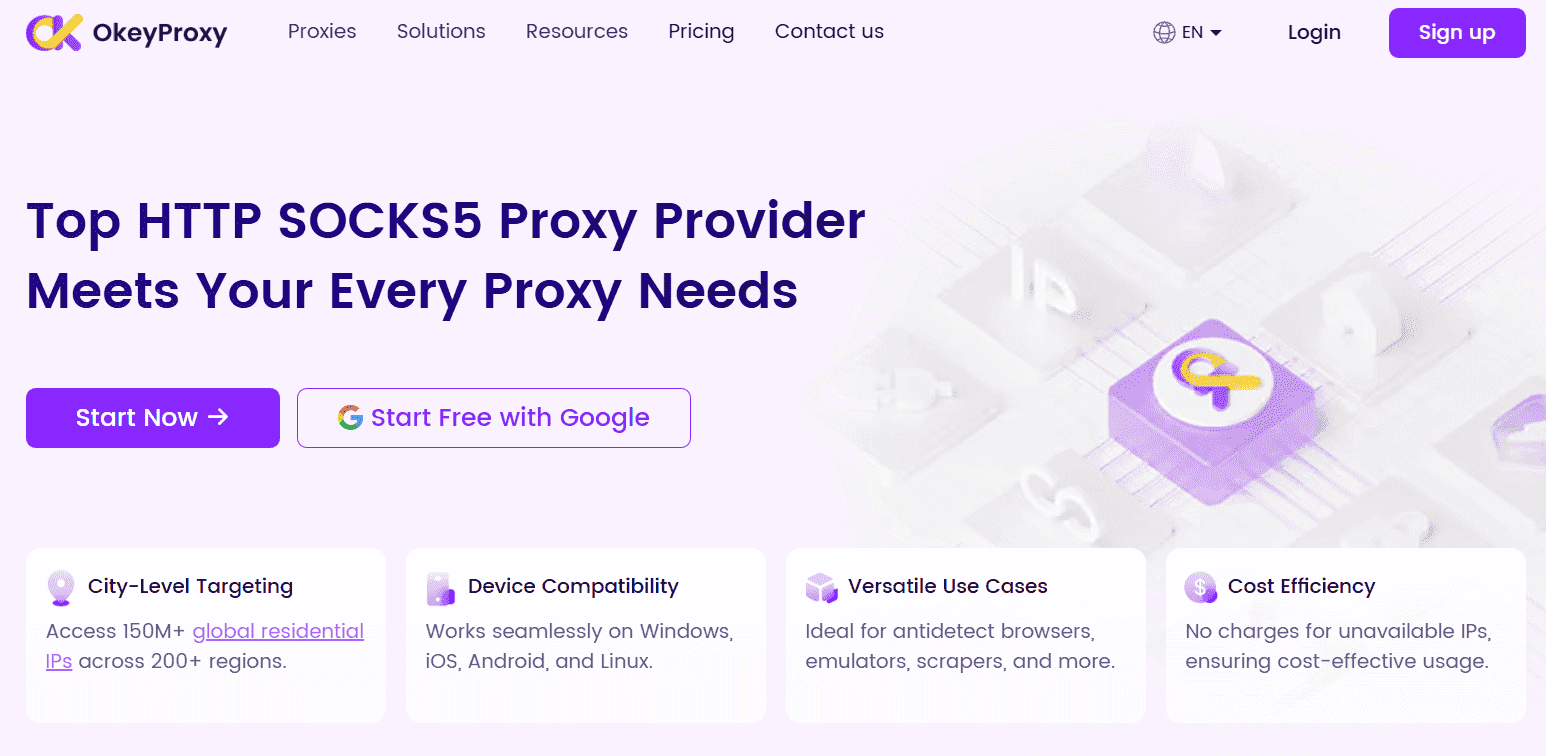
However, as websites strengthen access controls and personalize content by region, traditional methods of viewing the web often fall short. Within this evolving landscape, residential proxy infrastructure — such as that offered by OkeyProxy — has become an important tool for enabling authentic, scalable access to the global web.
Why the Local Web Has Become Harder to Access
To understand why businesses increasingly struggle to obtain accurate regional data, it is important to first examine how the modern web has evolved from a shared global space into a highly localized and controlled environment.
The Internet Is Global, but User Experiences Are Not
While the web is technically accessible worldwide, most major platforms customize content based on location, IP reputation, and behavioral signals. This leads to noticeable differences such as:
Region-specific pricing and product availability
Localized ad delivery and promotional content
Search results that vary by country, city, or even device
For businesses relying on data to guide decisions, these variations mean that a single, centralized view of the web is no longer sufficient.
Limitations of Traditional Access Methods
Many teams initially rely on data center proxies or standard VPN connections to simulate geographic access. Over time, these approaches reveal clear limitations:
Data center IPs are often flagged due to predictable traffic patterns
Shared IP environments increase the likelihood of blocks and CAPTCHAs
Returned data may be filtered, cached, or incomplete
As platforms continue to improve detection mechanisms, these constraints make it difficult to obtain consistent, location-accurate insights.
Residential Proxies as a Practical Response
As access challenges have become more pronounced, businesses have begun rethinking how they connect to online platforms, leading to broader adoption of residential proxy solutions.
How Residential Proxies Differ
Residential proxies route traffic through IP addresses assigned by Internet Service Providers (ISPs) to real households. From the platform’s perspective, this traffic appears indistinguishable from that of everyday users.
This distinction matters because it enables:
Higher trust scores during requests
Reduced friction when accessing localized content
More stable interactions with platforms sensitive to automation
Rather than attempting to bypass restrictions, residential proxies focus on blending naturally into normal user traffic.
Why Adoption Has Accelerated
The growing reliance on residential proxies reflects a broader shift in how businesses approach online access. As detection systems evolve, legitimacy and realism have become more important than raw connection speed or volume.
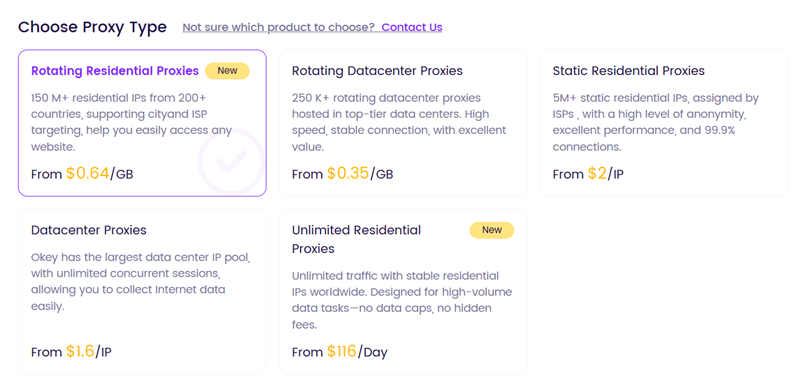
As a multi-type proxy provider, OkeyProxy has expanded its residential proxy network to address evolving access requirements.
Scale and Geographic Coverage as Core Requirements
Once residential proxies become part of regular workflows, questions quickly shift from whether they are needed to how broadly and reliably they can support global operations.
Why Coverage Matters More Than Ever
Once teams move beyond a single market, geographic flexibility becomes critical. Testing only a few locations often produces incomplete results, especially for global operations.
A scalable proxy network should support:
Access across both major and emerging markets
Consistent availability without regional bottlenecks
The ability to simulate user presence in diverse environments
OkeyProxy addresses this need with coverage spanning 200+ countries and regions, allowing businesses to operate without geographic blind spots.
The Role of a Large Residential IP Pool
Scale is not just about geography — it is also about volume. With over 150 million residential IPs, OkeyProxy reduces the operational risks associated with IP reuse, exhaustion, or forced downtime.
In practice, this supports:
High-frequency data collection without frequent interruptions
Parallel workflows across multiple regions
Long-term projects that require sustained access
Flexibility in Rotation and Session Behavior
Beyond coverage and volume, real-world use cases demand proxy behavior that can adapt to different tasks, usage patterns, and risk profiles.
Matching Proxy Behavior to the Task
Different workflows demand different connection characteristics. A flexible proxy setup allows teams to choose the most suitable approach:
Rotating residential IPs for large-scale monitoring and data collection
Static residential IPs for account-based workflows and persistent sessions
Rather than forcing all use cases into a single model, OkeyProxy supports both, enabling teams to adapt their infrastructure to real operational needs.
Reducing Operational Friction
By aligning IP behavior with task requirements, businesses spend less time troubleshooting access issues and more time analyzing results. This flexibility becomes especially valuable as proxy usage expands across departments.
Technical Compatibility and Stability
As proxy usage extends beyond isolated tasks and into daily operations, technical compatibility and connection stability become baseline expectations rather than optional features.
Protocol Support for Diverse Environments
Modern proxy usage extends beyond simple browsing. Support for both HTTP(S) and SOCKS5 protocols ensures compatibility with a wide range of tools, including:
Web scraping frameworks
Automation scripts
Anti-detect browsers and third-party platforms
This versatility allows proxies to integrate seamlessly into existing technical stacks.
Reliability as an Operational Baseline
Unstable connections can invalidate datasets or disrupt automated workflows. OkeyProxy emphasizes consistent uptime and connection stability, making it suitable for continuous and long-running operations.
For teams without deep technical backgrounds, a clear management interface further simplifies daily usage and oversight.
How Businesses Apply Residential Proxies in Practice
With the technical foundation in place, the value of residential proxies becomes most visible when examining how different teams apply them in real business scenarios.
E-commerce and Market Monitoring
Residential proxies enable retailers and analysts to view region-specific pricing, promotions, and availability. This ensures that collected data reflects what real local customers see, rather than generalized or default content.
Advertising Verification and Brand Safety
Marketing teams use residential access to confirm ad placement accuracy across regions. By appearing as local users, they can identify discrepancies, misuse, or fraudulent placements more effectively.
Social Media and Account Operations
Managing multiple accounts across countries requires consistent and credible login behavior. Assigning localized residential IPs helps reduce irregular activity signals and supports long-term account stability.
SEO and Local Search Analysis
Search engine results are heavily influenced by location. Residential proxies allow SEO teams to:
Track keyword rankings by region
Analyze SERP features accurately
Audit content visibility from a local perspective
Conclusion
As the web becomes more localized and context-driven, businesses need reliable ways to access digital environments as real users would. Residential proxy infrastructure plays a central role in supporting accurate data collection, regional verification, and global online operations.
By combining scale, flexibility, and authenticity, solutions such as residential proxy networks offered by providers like OkeyProxy help organizations navigate an increasingly segmented digital landscape with greater confidence.





Comments 0