
 EN
EN
 UK
UK
 RU
RU
 AR
AR
 BN
BN
 ZH
ZH
 DE
DE
 ES
ES
 FR
FR
 HI
HI
 ID
ID
 UR
UR
 PT
PT
 TR
TR
Popunder remains one of the most popular ad formats in digital marketing thanks to high traffic volumes, broad scalability, and proven effectiveness in performance campaigns. In this article, we’ll break down how the format works, which products it suits best, key strategies to unlock its potential, and how to accurately evaluate campaign results.
What is Popunder?
Popunder is an ad format where a new browser tab featuring a target landing page opens in the background after a user takes an action on a website. The page becomes visible once the user finishes viewing the primary content or switches between browser windows.
Unlike Pop-ups, Popunders do not block the screen or disrupt the user experience as heavily. At the same time, advertisers gain an extra touchpoint with the audience and access to large traffic volumes at a relatively low cost.
Format Advantages
High traffic volume: Popunder lets you quickly drive high amounts of traffic, making it ideal for broad-reach campaigns. It is especially useful for scaling proven conversion flows to new sites and GEOs.
Cost-efficiency: Popunder traffic is generally cheaper than many other ad formats. This allows you to test campaigns on a modest budget, gather statistics, and blacklist underperforming sources.
Flexible targeting: The format is available across numerous countries and website categories. You can set targeting parameters by region, device, operating system, and more.
No ad creatives required: You don't need banners or videos. The landing page plays the primary role, allowing you to focus your efforts entirely on the landing page, pre-lander, and overall funnel.
Fast optimization: High traffic volumes allow you to quickly evaluate placements, devices, browsers, and other segments before moving on to optimization.
High scalability: Successful campaigns can easily be expanded by increasing bids and budgets, plugging in new traffic sources, or launching in additional GEOs.
Funnel flexibility: Traffic can be sent directly to the landing page or routed through a pre-lander, quiz, offer wall, or another intermediate step.
Non-intrusive flow: Because the ad opens in a background tab, users continue interacting with the main site unhindered and view the ad later.
Disadvantages of Popunder
Like any format, Popunder requires testing and regular optimization.
Requires immediate user engagement: The landing page must instantly convey the offer and hook attention above the fold (on the first screen).
Variable placement quality: Quality differs across placements, making it critical to analyze sources and regularly update whitelist/blacklist parameters.
Data-dependent decisions: Significant data is needed to draw accurate conclusions—never judge a campaign's viability based on small traffic volumes.
Technical landing page requirements: Fast loading speeds, proper responsive rendering, and a clear value proposition directly impact conversion rates.
Capping requirements: Frequency capping must be monitored carefully to prevent ad fatigue and avoid wasting budget on redundant impressions.
Which Products and Verticals Suit Popunder Best?
While Popunder is considered a versatile format, it performs best in performance marketing—where high traffic volumes, quick hypothesis testing, and rapid scaling are critical.
Top-performing verticals include:
Dating: Highly effective due to broad reach and massive traffic volumes.
Utilities and VPNs: Mobile apps, browsers, antivirus software, VPN services, and utility tools.
Sweepstakes and Subscription Offers: Simple lead funnels allow for fast, efficient campaign scaling.
Finance, Mobile Apps, and E-commerce: Highly profitable when set up properly with high-converting pre-landers.
For complex or high-ticket products with longer decision cycles, Popunder can still work—-though it achieves peak efficiency when paired with a pre-lander or interactive warm-up flow.
Popunder Campaign Strategies
Popunder can serve as a primary traffic source or operate as part of a multi-stage funnel depending on your offer and goals.
Direct to Landing Page: Best for straightforward offers with short conversion paths. Users arrive immediately on the product page to complete the target action.
Pre-Lander Flows: An intermediate page helps spark interest, outline key benefits, and warm up users before sending them to the main offer page. Highly recommended for Nutra, and Financial offers.
Quiz Funnels: A brief interactive survey segments the audience, boosts engagement, and directs users to the offer that best matches their responses.
Multi-Format Campaigns: Combine Popunder with Native Ads, Push, In-Page Push, and Video to increase touchpoints across the target audience.
Scaling Winning Flows: Once a profitable combination is identified, scale up volume by targeting new placements, GEOs, adjusting bids, and scaling the budget.
Evaluating Campaign Performance
Evaluate Popunder success beyond simple metrics like clicks or traffic counts. Focus on ROI metrics that truly reflect profitability:
Conversions & Conversion Rate (CR): Shows the percentage of visitors completing the targeted action.
Cost Per Acquisition (CPA): Helps monitor the average cost per conversion relative to your target payout.
ROI and ROAS: Reflects overall profitability and return on ad spend.
Placement Quality: Breakdown by placement sources allows you to blacklist low-performing sites and reallocate budget to high-ROI placements.
Segment Performance (Device, GEO, Browser): Pinpoints the most profitable targeting parameters to double down on.
Tip: Avoid making optimization decisions based on limited data. Always collect statistically significant data before blacklisting weak sources or scaling high-performing ones.
Where to Launch Popunder Campaigns
Popunder campaigns are typically launched via ad networks that provide publisher inventory alongside targeting tools, bidding controls, and GEO options.
When choosing a network, pay close attention to traffic volume, inventory quality (direct publishers vs. resold traffic), analytics tools, and moderation speed—all of which directly impact campaign scalability.
One such ad network is our partner, OctoClick.
OctoClick is a self-serve advertising platform featuring traffic from direct publishers. Operating for over 9 years, the network generates more than 100 million impressions daily across 200+ GEOs.
The platform supports Popunder, Native, In-Page Push, and Video ad formats, offering flexible targeting settings, campaign management tools, and an in-house anti-fraud system. Popunder remains one of OctoClick's core formats, featuring particularly high traffic volumes across CIS countries.
Key Advantages of OctoClick:
Direct Publisher Traffic: No resold traffic. Placements are vetted manually, supported by a proprietary anti-fraud system to filter out junk traffic.
Advanced Optimization: 10+ targeting parameters, micro-bidding, flexible bid management, and real-time competitor price monitoring.
Convenient Analytics: Built-in statistics dashboards and easy S2S postback integration for precise campaign tracking.
Dedicated Account Manager: Personal manager support for onboarding, optimization, and scaling—regardless of budget size.
Tailored Solutions for Top Advertisers: OctoClick functions essentially as an external in-house team to help manage and scale high-volume campaigns.
Setting Up Your First Campaign
Account registration on OctoClick takes only a few minutes via email or Google. Including your Telegram handle during registration is recommended so your dedicated manager can assist with campaign setup, launches, and troubleshooting.
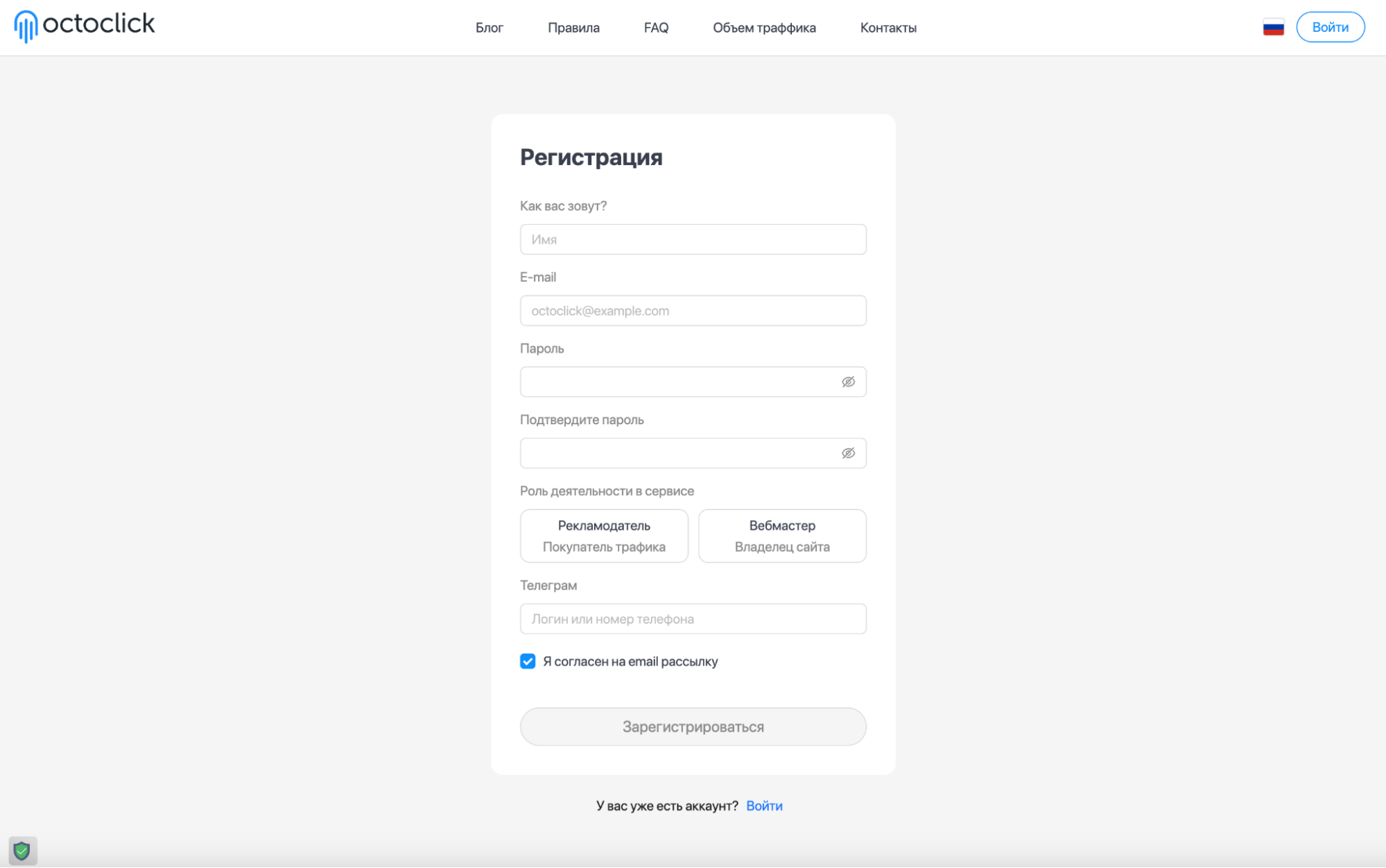
The minimum deposit is $20. However, to conduct proper Popunder tests, a budget of $50–$100 is recommended to gather enough data to evaluate offer potential.
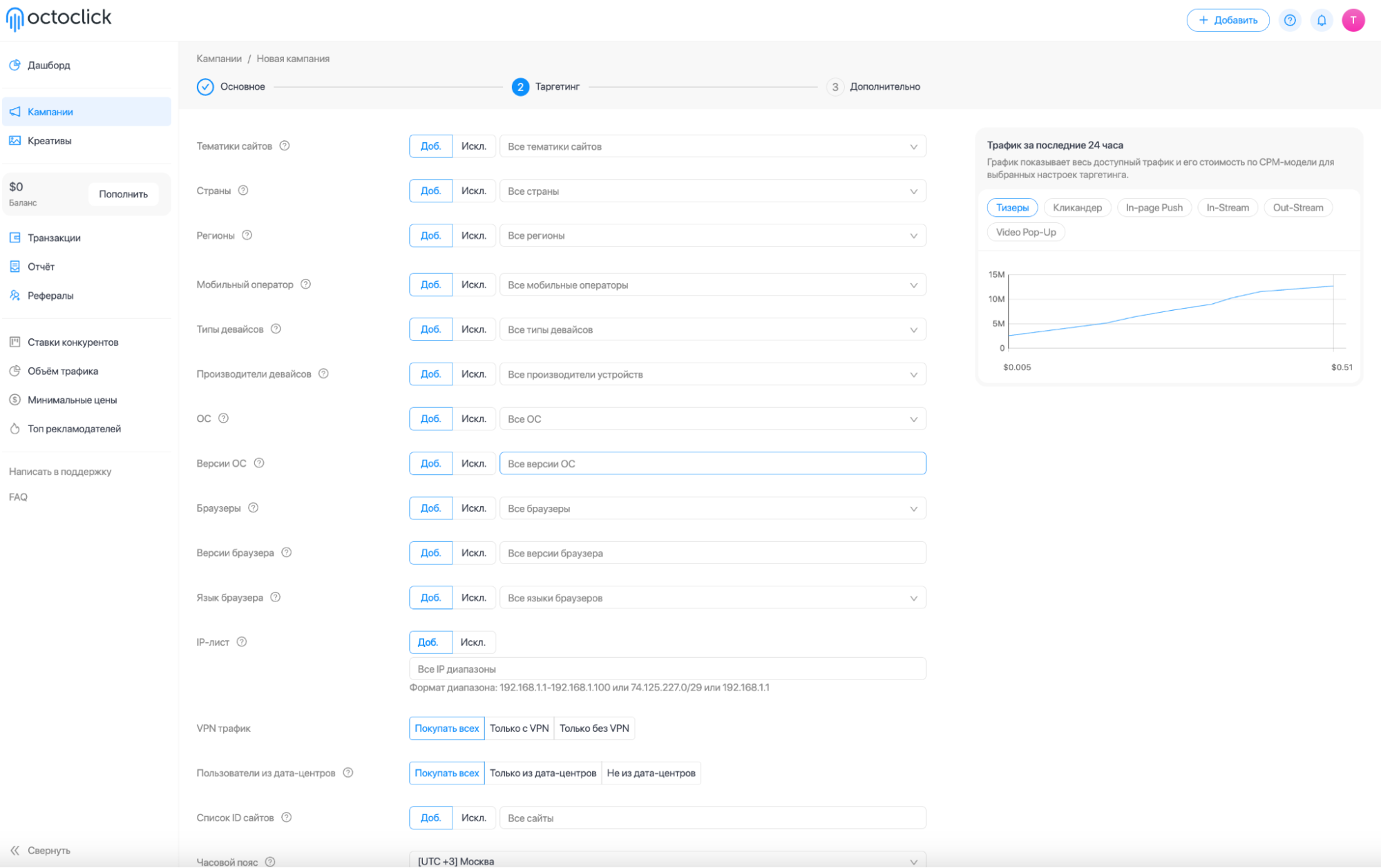
Step 1: Campaign Configuration
Go to the campaign creation section in OctoClick. Select your vertical, category, and set hourly budget limits.
Select your desired targeting settings.
On Level 3, choose tracking link presets and configure your S2S postback settings.
Step 2: Adding Creatives
Navigate to the Creatives section, click Add New, and link it to your newly created advertising campaign.
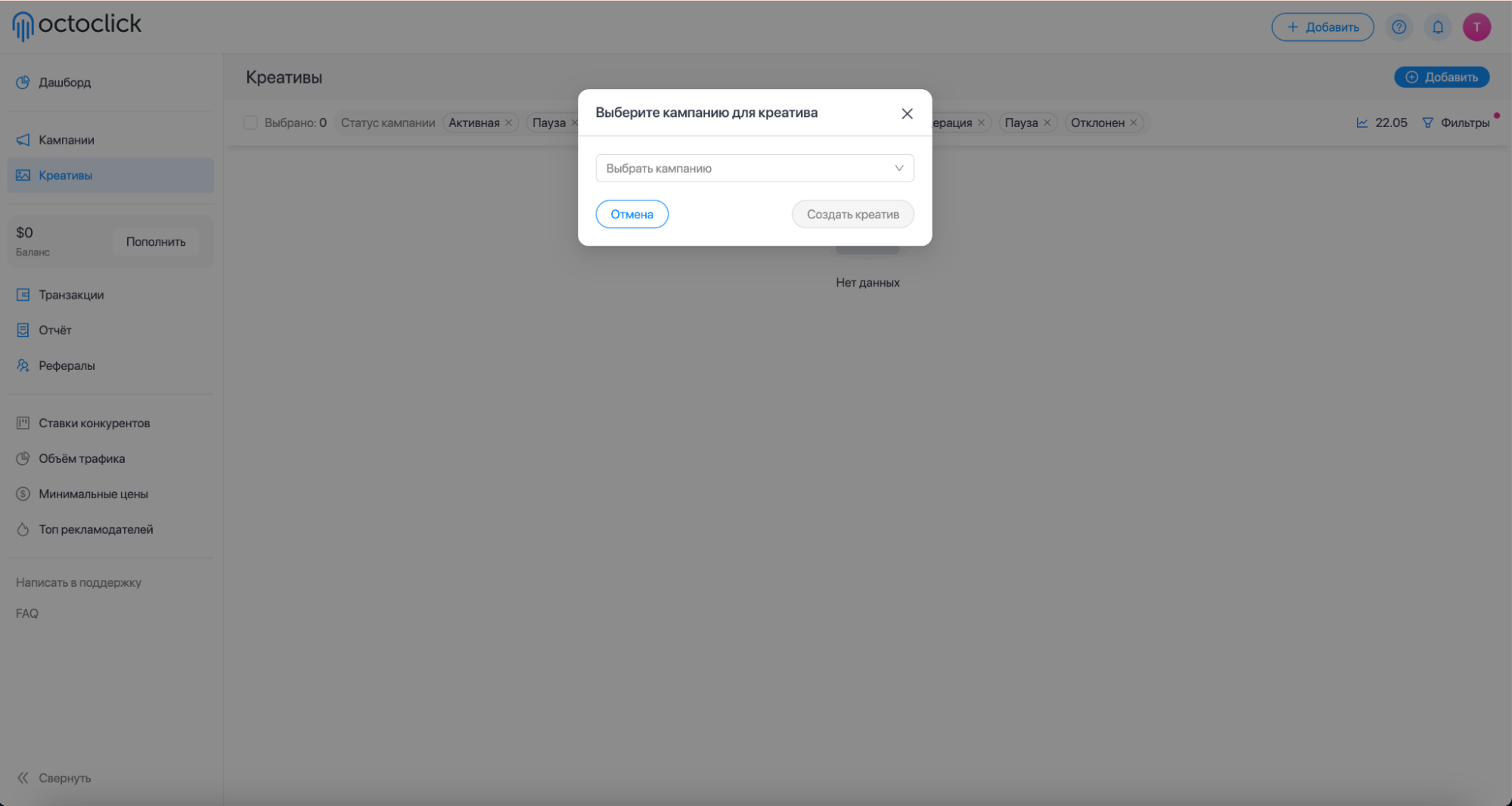
Select Popunder as your creative type (format).
Fine-tune creative-level targeting parameters (or retain the campaign-level settings you configured earlier).
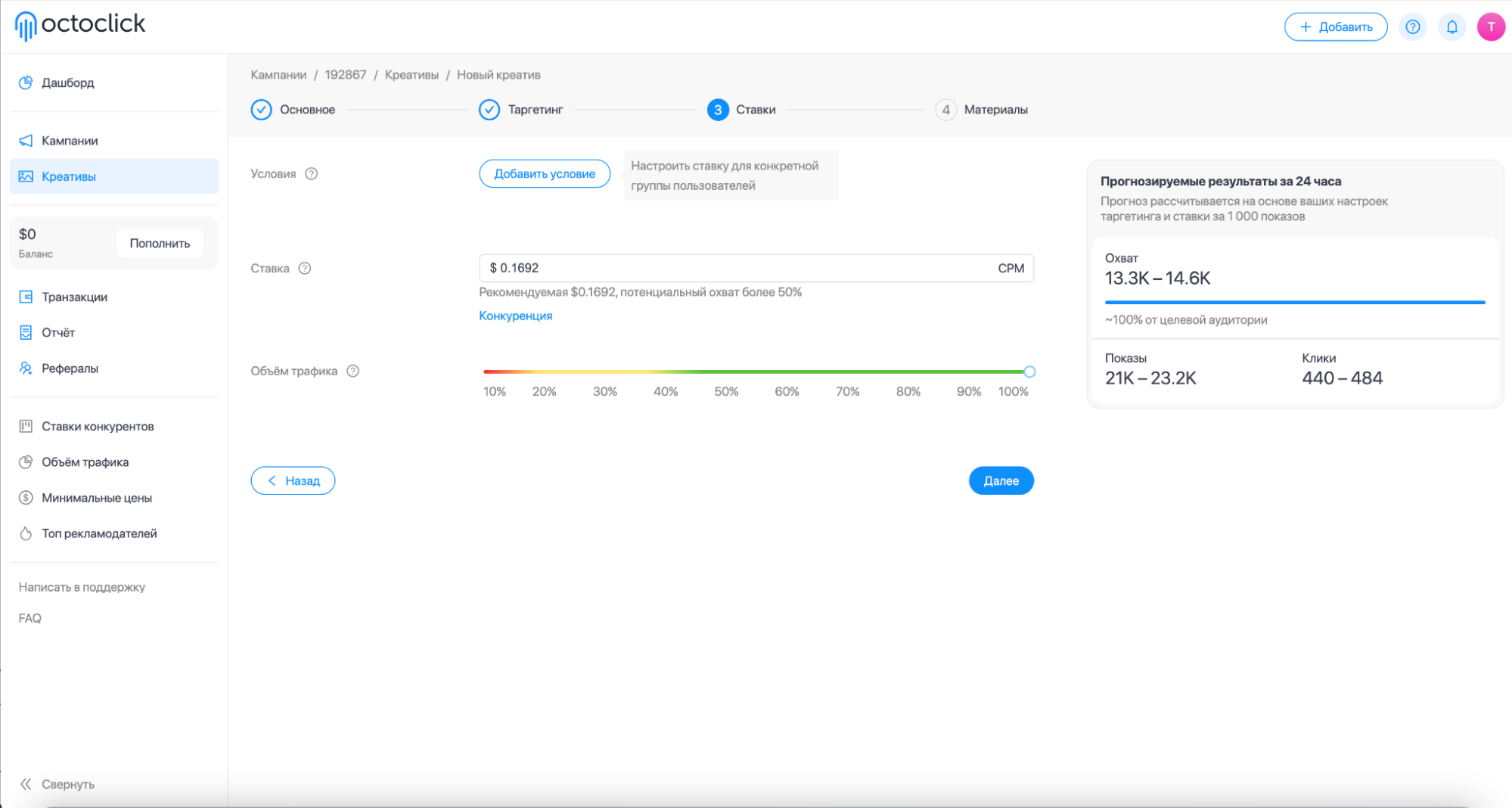
Set your base bids and add custom bid conditions for specific target segments. You can also set intended traffic purchase volumes based on your targeting parameters—bids directly determine your impression volume.
Step 3: Analytics & Optimization
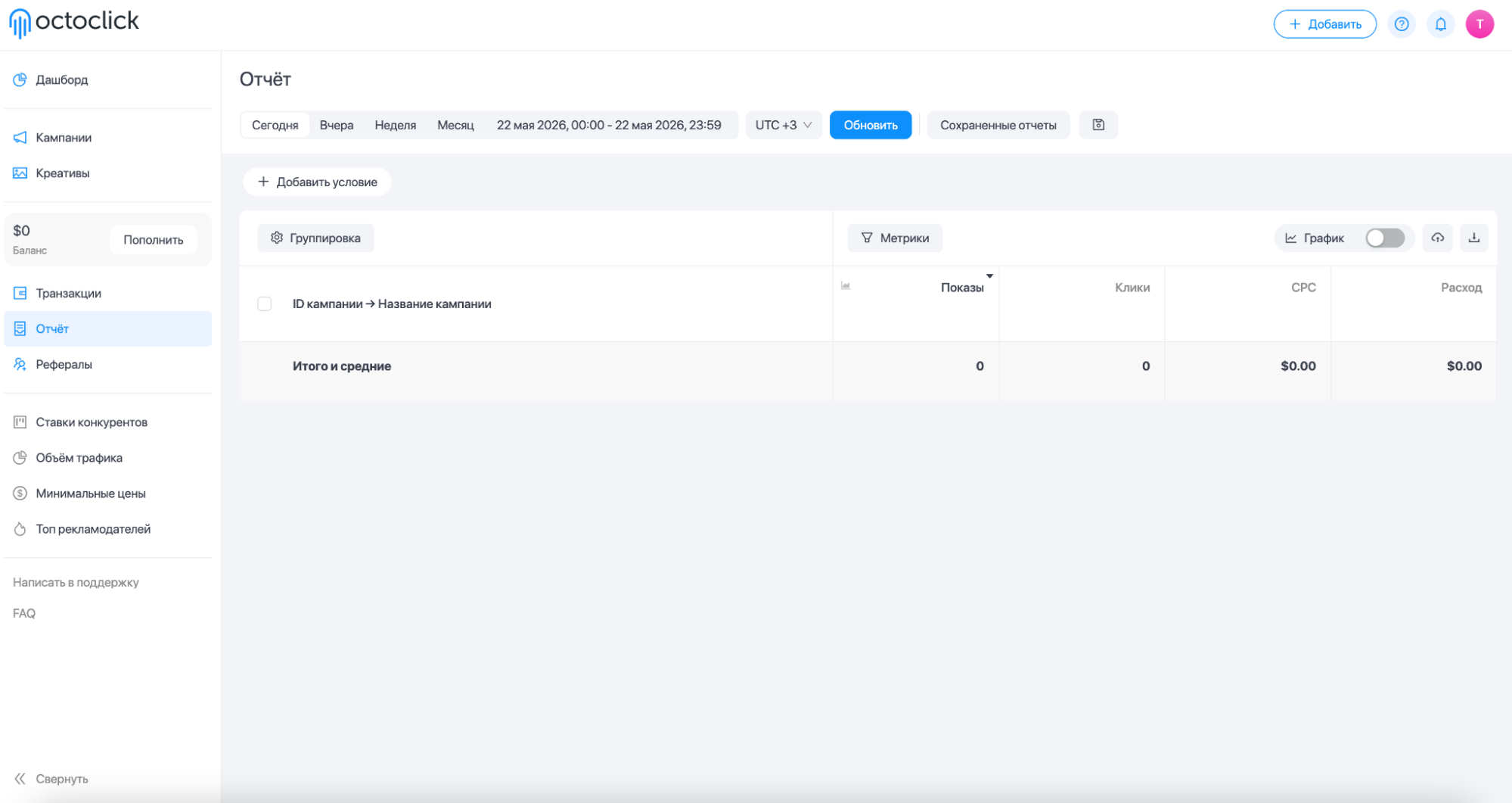
Track campaign performance in the Reports section across main KPIs: impressions, clicks, CPC, and total spend.
Customize reports by Zone ID, Creative ID, Campaign ID, or other metrics for granular performance analysis.
OctoClick also provides tools to monitor competitor bidding trends, traffic volume distribution across formats and GEOs, and real-time minimum floor prices.
Conclusion
Popunder remains a highly effective digital advertising format thanks to massive traffic supply, low entry costs, and tremendous scaling potential. With proper setup and regular optimization, it delivers consistent results across a wide range of verticals.
If you want to test the format, give OctoClick a try. The platform delivers high-quality direct publisher traffic, flexible optimization features, and robust scaling tools for both small tests and high-volume campaigns.
The minimum deposit is just $20, and using the promo code SPYHOUSE10 gives you an extra +10% bonus on your first deposit.






Comments 0